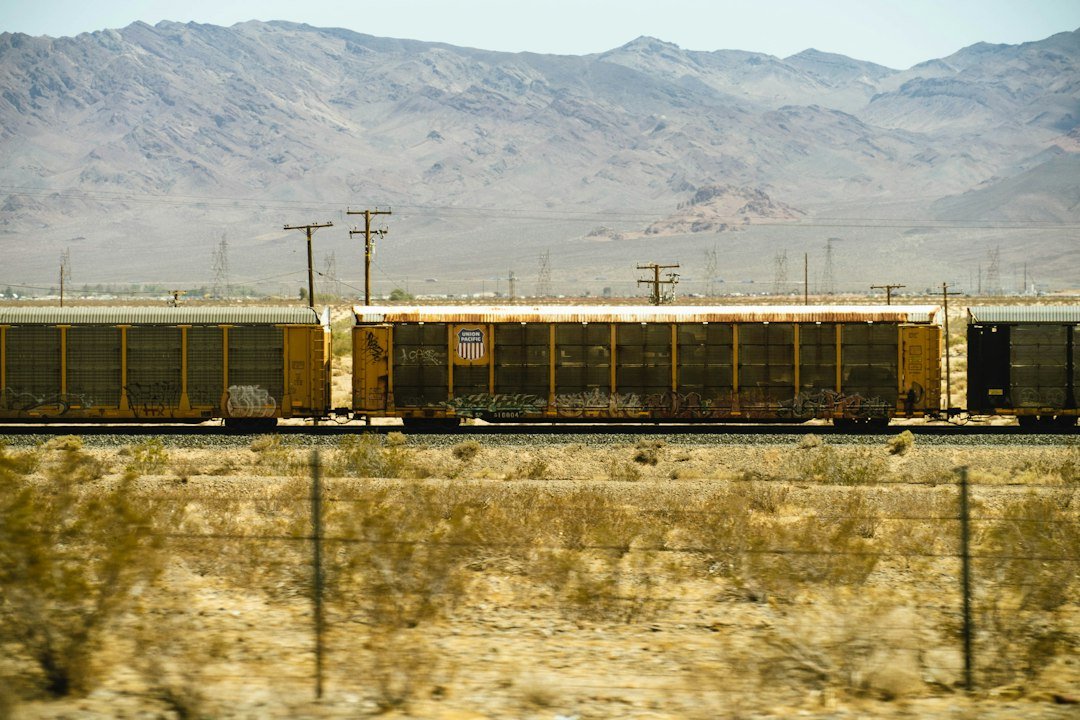
The idea of a single railway running the length of the Arabian Peninsula’s Gulf coast, from Kuwait in the north to Oman in the south, has been discussed for well over a decade. On Sunday, 8 November 2026, it moved a significant step closer to reality. Transport ministers from all six Gulf Cooperation Council (GCC) states signed a General Railway Agreement in Bahrain, setting out the shared rules under which their national networks will eventually join up and run as one system.
The deal does not lay any track by itself. What it does is tackle the less visible but equally important problem of making six separately built railways work together: common technical standards, compatible operations, safety requirements and a clear split of responsibilities. Here is what was agreed, how far the project has come, and what still has to happen before the 2030 target date.
Key takeaways
- All six GCC states signed a General Railway Agreement on 8 November 2026 at the 30th meeting of GCC transport ministers, hosted by Bahrain.
- The agreement creates a common operating framework covering technical specifications, interoperability, safety and coordination with the Gulf Railway Authority.
- The network, widely cited at around 2,100km, is reported to be 55.9% complete, with full operations targeted for December 2030.
- Passenger trains are planned to run at up to 200km/h and freight trains at 80–120km/h.
- Key missing links include the King Hamad Causeway between Bahrain and Saudi Arabia and cross-border connections to Kuwait and Qatar.
What was signed in Bahrain
The signing took place at Al Zahir Palace during the 30th meeting of GCC transport ministers, with Bahrain’s Crown Prince and Prime Minister, Prince Salman bin Hamad Al Khalifa, in attendance. GCC Secretary General Jasem Albudaiwi described the agreement as an important step toward Gulf integration in the transport sector, while Bahrain’s Minister of Transportation and Telecommunications, Sheikh Abdulla bin Ahmed Al Khalifa, called it a milestone for regional connectivity.
According to the GCC Secretariat, the agreement sets up a common operating framework for the regional network. In practical terms, it covers four areas: connecting the national railways to one another, harmonising technical specifications, ensuring that trains and systems are operationally compatible and meet shared safety requirements, and coordinating follow-up among member states. It also spells out what each country is responsible for and how it will work with the Gulf Railway Authority, the regional body GCC leaders approved in January 2022 to oversee policy and coordination for the project.
The route and the numbers
The planned line starts in Kuwait, runs south through Saudi Arabia, branches to Bahrain, connects with Qatar and the UAE, and continues into Oman. Most coverage gives the total length as roughly 2,100km, with some reports citing 2,117km; Arab News, reporting on the signing, used a figure of 1,768km for the network, so the exact total depends on which sections are counted. The system is designed for mixed traffic, with passenger services at speeds of up to 200km/h and freight trains at 80–120km/h.
Progress is uneven from country to country, which is exactly why a common rulebook matters. Saudi Arabia already operates an extensive network, including the Haramain High-Speed Railway, while the UAE has built out its national Etihad Rail system. Overall completion was put at 55.9% at the time of the signing, with full operations targeted for December 2030. Analysts have noted that individual cross-border sections could open before then, once they are finished.
| Item | Reported figure |
|---|---|
| Member states | Kuwait, Saudi Arabia, Bahrain, Qatar, UAE, Oman |
| Network length | About 2,100km (2,117km in several reports) |
| Overall completion | 55.9% |
| Target for full operation | December 2030 |
| Passenger train speed | Up to 200km/h |
| Freight train speed | 80–120km/h |
The links that will tie the network together
The most advanced cross-border piece is Hafeet Rail, the roughly 238km line linking Oman’s port city of Sohar with the UAE network at Al Ain and on to Abu Dhabi. Valued at about $2.5 billion, it is being developed by Etihad Rail, Oman Rail and Mubadala. Oman’s transport minister has said trial operations should begin in the fourth quarter of 2027. Once running, passengers should be able to travel from Sohar to Abu Dhabi in about 100 minutes, and a single freight train will be able to move more than 15,000 tonnes of cargo, equivalent to around 270 standard containers.
Bahrain’s connection depends on the proposed King Hamad Causeway, a new crossing to Saudi Arabia that would run alongside the existing King Fahd Causeway. Bahrain’s transport ministry plans it with four road lanes and two rail tracks, giving a rail route of about 57km from a terminal at Ramli in Bahrain to Dammam. At the northern end, Saudi Arabia and Kuwait have been working on a link of around 650km from southern Kuwait toward Riyadh, and a Riyadh–Doha high-speed line is also in planning to bring Qatar into the system.
Why it matters for trade and travel
Much of the overland freight moving between Gulf states today travels by road, which means queues at border crossings, high fuel use and heavy wear on highways. A connected railway offers a cheaper, lower-emission way to move bulk goods such as minerals, steel, petrochemicals and food between ports, industrial zones and consumer markets. Planners see the network as a continuous land corridor that would let a container landed at one Gulf port reach a factory or warehouse in a neighbouring country by rail.
That logic is already shaping bilateral deals. In October, Saudi Arabia and the UAE signed a memorandum of understanding on the transit of goods and freight between them, alongside technical and economic studies on logistics integration. For passengers, the prize is fast intercity travel that could compete with short-haul flights and long desert drives, linking cities, airports and tourism destinations across the region. A shared rail system would also support new investment in warehousing, logistics parks and related services along the route.
Challenges and what comes next
The project’s history is a reminder that agreements are only a starting point. Earlier timelines slipped, and the scheme was effectively restarted in 2021 after several years of limited progress. The new framework addresses one of the hardest obstacles — making separately designed national systems compatible — but delivery still depends on every member keeping to its construction schedule. Border procedures will need to be streamlined so that freight trains are not held up at each frontier, and signalling, ticketing and operating systems must be integrated.
The milestones to watch over the next few years are the start of Hafeet Rail trials in late 2027, contract awards and construction on the King Hamad Causeway, and firm progress on the Saudi–Kuwait and Saudi–Qatar links. Each of these will show whether the December 2030 target is realistic or whether the network opens in stages over a longer period.
Frequently asked questions
When will the GCC railway be completed?
The Gulf Railway Authority and member states are targeting full operations by December 2030. Some cross-border sections, such as the Oman–UAE Hafeet Rail, are expected to start running earlier.
Does the new agreement mean construction is starting?
Not directly. Construction is already under way in several countries. The agreement sets the legal and technical framework — shared standards, safety rules and responsibilities — so that the national lines can operate as one network once they are connected.
Will the railway carry passengers or just freight?
Both. The network is designed for mixed traffic, with passenger trains at up to 200km/h and freight trains at 80–120km/h.
The bottom line
The General Railway Agreement turns a long-standing regional ambition into a shared operating rulebook, and with the network reported to be more than half complete, the GCC railway is closer than it has ever been. The hard part now is execution: finishing the cross-border links, aligning border procedures and keeping six national programmes on the same timetable. If that happens, the Gulf could have a continuous rail corridor from Kuwait to Oman by the end of the decade.
Photo: Leo Bayard on Unsplash (illustrative).