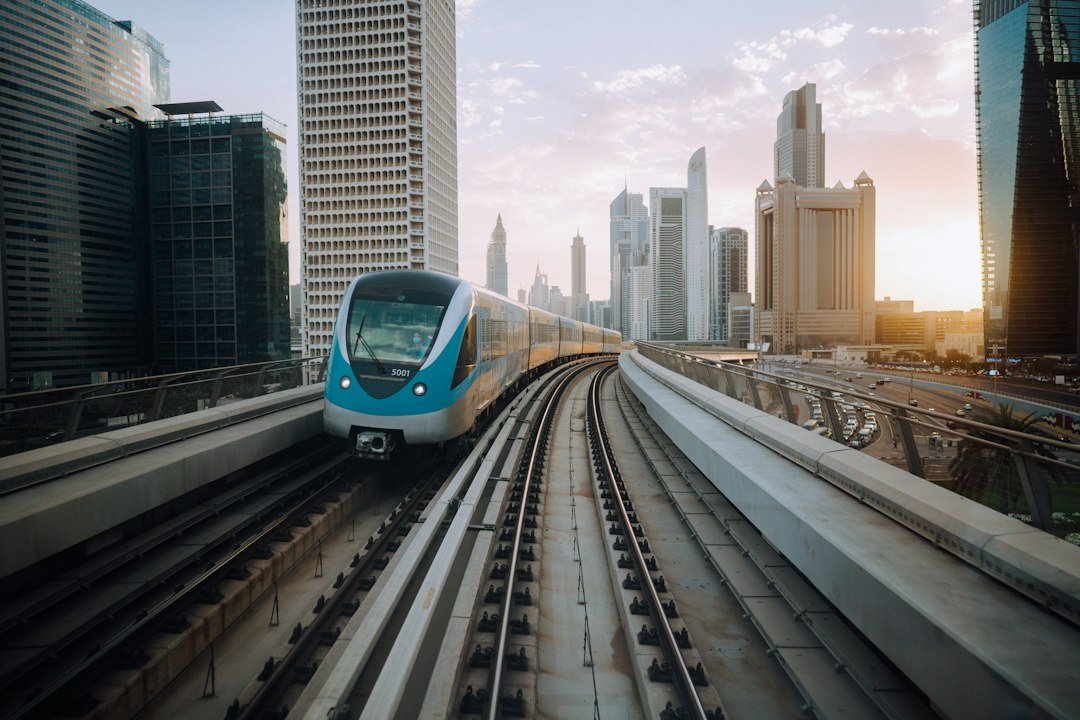
For the first time, travellers can take a train between the UAE’s two largest cities. Etihad Rail officially launched its national passenger network on 30 September 2026, opening Dubai’s Al Yalayis Station and starting regular services between Abu Dhabi and Dubai. The launch is the biggest step yet in a project that began as a freight railway and is now becoming part of everyday travel in the Emirates.
Key takeaways
- Abu Dhabi–Dubai passenger trains started on 30 September 2026, with the trip taking about 64 minutes.
- The network currently serves Abu Dhabi, Dubai, Fujairah and Al Dhaid in Sharjah.
- More than 150,000 people used the introductory Abu Dhabi–Fujairah service before Dubai joined the network.
- Further stations are due to open in stages through to March 2027.
How the new service works
Trains run from Abu Dhabi Station through Mohamed bin Zayed City Station and on to Al Yalayis Station in Dubai. At launch, Etihad Rail scheduled 10 Abu Dhabi–Dubai trains a day, five in each direction, with the first departure leaving Dubai shortly after 6am. Early demand was strong enough that the operator added six extra Abu Dhabi–Dubai services for the first weekend of October.
Dubai passengers can also travel directly to the east coast, with the Dubai–Fujairah journey taking roughly 70 minutes. Meanwhile, six trains a day continue to run between Abu Dhabi and Fujairah, the route that opened first.
Approximate journey times
| Route | Approx. time |
|---|---|
| Abu Dhabi – Dubai | 1 hour 4 minutes |
| Dubai – Fujairah | 1 hour 10 minutes |
Connecting with the Dubai Metro
One of the most practical features of the launch is how Al Yalayis Station plugs into Dubai’s existing transport. A 400-metre pedestrian bridge links it to Jumeirah Golf Estates Metro Station, so passengers can switch to the Dubai Metro Red Line for onward travel across the city. Dubai’s Nol system also works alongside Etihad Rail, with a single QR code available for journeys that combine trains, the Metro, trams and buses.
This kind of first- and last-mile connection matters. An intercity railway is only convenient if passengers can easily reach their final destination, and linking directly to the Metro removes one of the biggest barriers to choosing the train over the car.
How the rollout has unfolded
Etihad Rail chose a phased approach rather than opening the entire network at once. An introductory service between Abu Dhabi and Fujairah began on 30 June 2026, with fares on that route starting from AED55 in Comfort class and AED120 in Premium class. That trial period gave the operator real-world feedback before adding Dubai. According to Etihad Rail, passengers on the introductory route typically booked around 10 days ahead, and repeat journeys grew over the summer.
Passenger services are run by Etihad Rail Passenger Services, a joint venture between Etihad Rail and the international transport operator Keolis.
Upcoming stations
- 30 November 2026: Zayed City and Liwa
- 30 December 2026: further stations in the Al Dhafra Region
- 30 March 2027: Sharjah Station
Once complete, the passenger network is planned to connect 11 cities and regions across the country, stretching from Al Sila near the Saudi border in the west to Fujairah on the east coast.
Not the same as high-speed rail
It’s worth separating this service from the UAE’s separate plans for a high-speed line between Abu Dhabi and Dubai. Etihad Rail has described the two as different products: the current passenger railway is designed to link many communities affordably and comfortably, while high-speed rail is aimed at very fast trips between the centres of the largest cities. The existing service is the one running today.
Why it matters
- A real alternative to the E11: the motorway between Abu Dhabi and Dubai is one of the busiest roads in the country. A predictable one-hour train gives commuters and business travellers another option.
- Lower emissions: moving people by rail instead of private cars supports the UAE’s climate targets.
- Regional reach: towns such as Al Dhaid, Fujairah and, soon, communities in Al Dhafra gain a direct rail link to the main cities.
- Foundation for GCC rail: the same national network is designed to connect with future cross-border links to Oman and Saudi Arabia.
Frequently asked questions
Where is the Etihad Rail station in Dubai?
Dubai’s station is Al Yalayis Station, in the Jumeirah Golf Estates area. It connects to the Dubai Metro Red Line via a pedestrian bridge.
How long does the train take from Abu Dhabi to Dubai?
About one hour and four minutes.
When does Sharjah get a station?
Sharjah Station is scheduled to open on 30 March 2027. Al Dhaid, also in the emirate of Sharjah, is already served.
The bottom line
The Abu Dhabi–Dubai launch turns Etihad Rail from a freight project most residents never saw into a service they can actually use. With strong early demand, a direct Metro connection and more stations on the way, the coming months will show how quickly rail becomes a normal part of travel in the UAE.
Photo: Damir Babacic on Unsplash (illustrative).