Abu Dhabi’s railway ambitions are no longer confined to the UAE. On 5 October 2026, ground was broken in the Jordanian port city of Aqaba on a 403-kilometre freight line that will carry phosphate and potash from the kingdom’s southern mining belt down to the Red Sea. The project is valued at about US$2.5 billion and is being developed by a joint company owned half by Abu Dhabi’s L’imad Holding and half by Jordanian investors.
For Jordan, it is the largest railway scheme of its kind in the country’s history. For the UAE, it is a sign that Etihad Rail, which has only just started running passenger trains between Abu Dhabi and Dubai, is now exporting its know-how and acting as a vehicle for Gulf investment in regional trade corridors. Here is what the project involves and why it matters.
Key takeaways
- Construction has formally started on the Aqaba – Al Shidiyeh – Ma’an railway, a 403 km freight line in southern Jordan.
- The estimated cost is US$2.5 billion, up from the US$2.3 billion and 360 km figures cited when the deal was first announced in 2024.
- The developer, Jordan-UAE Railway Company, is split 50/50 between Abu Dhabi’s L’imad Holding and four Jordanian shareholders, including the country’s two big mining companies.
- The line is designed to move around 16 million tonnes of minerals a year and could save roughly US$40 million annually in transport costs.
- Etihad Rail will contribute rail development and operating expertise drawn from the UAE national network.
What happened in Aqaba
The groundbreaking ceremony was attended by King Abdullah II of Jordan and Abu Dhabi Crown Prince Sheikh Khaled bin Mohamed bin Zayed Al Nahyan, underlining the political weight both governments attach to the scheme. The railway will run inland from Aqaba through the phosphate and potash production areas around Al Shidiyeh and connect to the Ma’an Logistics Zone, where plans include a dry port, customs facilities and industrial activity.
The engineering scope is substantial for a single-purpose freight line. According to trade press reports, the works include track laying, about 55 bridges and six tunnels, a sign of the difficult terrain the route must cross. The line will handle bulk minerals as its core business, but it is also being designed to carry containers between the port, production centres and inland logistics facilities.
No opening date was announced at the ceremony. Earlier plans envisaged a build period of around five years, with operations targeted for 2030, but the latest statements have not confirmed a timetable.
Background: from a 2024 pledge to a joint company
The railway traces back to September 2024, when Etihad Rail and Jordan’s transport ministry signed agreements for a 360 km line linking Aqaba port with mining sites, then valued at US$2.3 billion. That deal sat within a wider package of UAE investment commitments to Jordan announced in 2023, as Abu Dhabi stepped up its role as one of the kingdom’s largest foreign investors.
Since then, the project has been restructured into the Jordan-UAE Railway Company. On the Emirati side sits L’imad Holding, the Abu Dhabi sovereign investment platform that absorbed ADQ’s portfolio in early 2026 and counts Etihad Rail among its companies. The Jordanian half is shared between Jordan Phosphate Mines Company, Arab Potash Company, the Government Investments Management Company and the Social Security Investment Fund. Bringing the main cargo owners into the shareholding is a deliberate choice: it gives the railway an anchor customer base from the day it opens.
The headline figures have grown along the way. The route is now 403 km rather than 360 km, and the estimated cost has risen by about US$200 million, although the partners have not set out in detail what drove the change.
| Item | 2024 announcement | October 2026 groundbreaking |
|---|---|---|
| Length | 360 km | 403 km |
| Estimated cost | US$2.3 billion | US$2.5 billion |
| Mineral capacity | 16 million tonnes a year | About 16 million tonnes a year |
| Structures | Not specified | About 55 bridges, 6 tunnels |
Why it matters for Jordan’s mining exports
Phosphate and potash are among Jordan’s most important exports, and both are used heavily in global fertiliser production. Today much of this output travels to Aqaba by truck, which is costly, wears down highways and adds to congestion on the main southern road corridor. Shifting around 16 million tonnes a year onto rail is expected to cut transport costs by about US$40 million annually and make Jordanian producers more competitive against international rivals.
The project is also expected to create about 5,000 jobs in southern Jordan, spread across construction, operations and related services. The Ma’an logistics zone, if it develops as planned, could turn the end of the line into a hub for warehousing and light industry rather than just a loading point.
How it fits the bigger Gulf picture
The Aqaba line shows how Gulf sovereign investors are using infrastructure to extend their reach into regional supply chains. Etihad Rail built the UAE’s national freight network, recently launched passenger services between Abu Dhabi and Dubai, and is a partner in Hafeet Rail, the cross-border link to Oman. Taking that experience into Jordan turns a domestic railway builder into a regional operator and investor.
It also echoes a pattern seen in Abu Dhabi’s port investments, where the emirate has been buying or building terminals that sit on key commodity routes. A rail spur feeding a Red Sea port fits naturally into that logistics strategy. The Jordanian government has described the line as a possible foundation for future connections towards Saudi Arabia and the wider Gulf, although no such extension has been approved.
Challenges and what comes next
Heavy civil works through mountainous terrain carry cost and schedule risk, and the jump from US$2.3 billion to US$2.5 billion shows how quickly estimates can move. The partners will also need to finalise construction contracts, rolling stock and operating arrangements, and coordinate with Aqaba port so that loading capacity keeps pace with rail deliveries. Watch for contract awards and a confirmed opening date as the next milestones.
Frequently asked questions
Who owns the Aqaba – Ma’an railway?
It is being developed by the Jordan-UAE Railway Company, owned 50% by Abu Dhabi’s L’imad Holding and 50% by four Jordanian shareholders: Jordan Phosphate Mines Company, Arab Potash Company, the Government Investments Management Company and the Social Security Investment Fund.
What will the railway carry?
Mainly phosphate and potash heading to Aqaba for export, at about 16 million tonnes a year, plus containers moving between the port and inland logistics sites.
When will it open?
No official opening date has been given. Earlier plans pointed to a roughly five-year construction period, with operations around 2030.
The bottom line
The Aqaba railway is a practical, cargo-led project: it links mines to a port, gives the mining companies a stake in the outcome and promises lower costs and less road traffic. For the UAE, it marks a major step for Etihad Rail beyond the Gulf and shows Abu Dhabi using rail, not just ports, to build influence along regional trade routes.
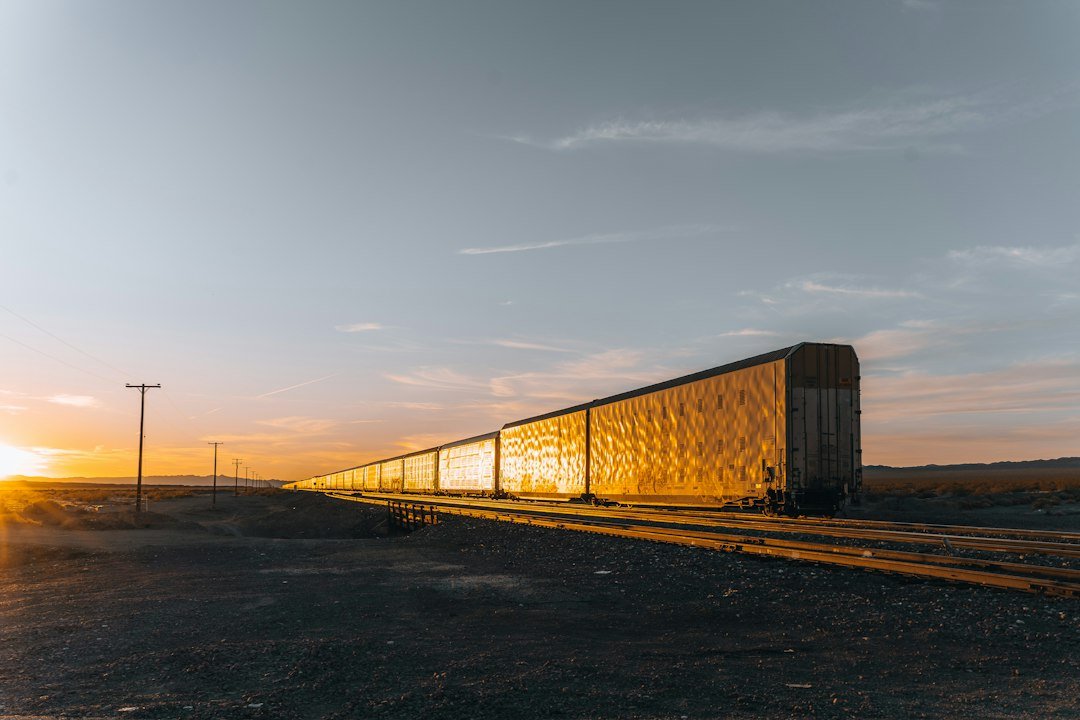
Photo: Fabian Kleiser on Unsplash (illustrative).