Dubai’s plan to build what it describes as the world’s largest airport has passed an important milestone. Dubai Aviation Engineering Projects (DAEP), the government body that delivers the emirate’s aviation infrastructure, has awarded a contract worth an estimated AED10 billion (about $2.7 billion) for the substructure of the West Terminal at Al Maktoum International Airport, also known as Dubai World Central (DWC). The award was first reported by MEED on 9 October 2026.
The winning bidder is a joint venture of China Civil Engineering Construction Corporation (CCECC) and Abu Dhabi-based Tristar Engineering & Construction. The package is one of the largest single awards so far on the roughly $35 billion expansion, and it marks the point where the project shifts from preparatory and foundation work into the main build of its first passenger terminal.
Key takeaways
- DAEP has awarded the West Terminal substructure at Al Maktoum International to a CCECC–Tristar joint venture, at an estimated AED10bn ($2.7bn).
- The West Terminal is planned as a seven-level building of around 800,000 square metres, able to handle 45 million passengers a year.
- It is the second of three planned terminals in an expansion approved in April 2024 at a cost of AED128bn (about $35bn).
- At full build-out the airport is designed for up to 260 million passengers and 12 million tonnes of cargo a year, with five parallel runways.
- DAEP said in June it expected to award more than AED55bn ($15bn) of construction contracts by the end of 2026.
What has been awarded
A terminal substructure is everything below and around the ground line that the visible building will sit on: the foundations, basement levels, structural slabs and the underground spaces that carry services, baggage systems and transport links. For a terminal of this size, that is a major engineering job in its own right, which explains the value of the package.
According to project details reported alongside the award, the West Terminal will rise across seven levels and cover roughly 800,000 square metres. Once complete, it is expected to process 45 million passengers a year. It will be tied to the airside by an automated people-mover, a driverless train system that will eventually have 14 stations when the airport is fully built.
The two partners bring different strengths. CCECC is a large state-owned Chinese contractor with a long record of transport projects abroad, while Tristar is an Abu Dhabi-headquartered engineering and construction group that gives the venture a local base.
Background: from cargo airfield to future mega-hub
Al Maktoum International opened in 2010 as a cargo airport in Dubai South, about 37 km south-west of the city centre, and began handling passenger flights in 2013. For most of its life it has played a supporting role to Dubai International (DXB), which remains one of the busiest airports in the world for international travel. DXB welcomed a record 95.2 million passengers in 2025, up 3.1% on the previous year.
Because DXB is hemmed in by the city around it, it has little room left to grow. In April 2024, Sheikh Mohammed bin Rashid Al Maktoum, Vice President and Prime Minister of the UAE and Ruler of Dubai, approved designs for a new passenger terminal at Al Maktoum International costing AED128 billion. The plan foresees an airport about five times the size of DXB, with five parallel runways and around 400 aircraft gates. All of DXB’s operations, including those of Emirates and flydubai, are expected to move to the new site over time.
When the plan was unveiled, officials said the first phase was expected to be ready within ten years, with capacity for around 150 million passengers a year. Austrian architecture firm Coop Himmelb(l)au and engineering consultancy Dar Al-Handasah were confirmed in 2024 as lead masterplanning and design consultants.
How the contract fits the bigger picture
The West Terminal deal is part of a steady sequence of awards. Several packages have already been let, including enabling works, a second runway, initial structural foundations and concourse substructures. In July, a joint venture of Japan’s Mitsubishi Corporation and India’s Larsen & Toubro won an estimated $1.5bn contract for four underground people-mover stations in the first phase.
| Item | Detail |
|---|---|
| Latest award | West Terminal substructure, about AED10bn ($2.7bn) |
| Contractor | CCECC and Tristar Engineering & Construction JV |
| West Terminal size | Seven levels, about 800,000 sq m |
| West Terminal capacity | 45 million passengers a year |
| Total expansion budget | AED128bn (about $35bn) |
| Full build-out capacity | Up to 260 million passengers and 12 million tonnes of cargo a year |
The scale of the programme also matters beyond aviation. The airport sits at the heart of Dubai South, a planned district of homes, offices and logistics zones. When the expansion was approved, Dubai said demand for housing around the airport could eventually reach one million people, which points to years of further work in roads, utilities and real estate.
Why it matters
Aviation is one of the pillars of Dubai’s economy, supporting tourism, trade, logistics and the emirate’s role as a connecting point between Europe, Asia and Africa. With DXB already running close to its practical limits, new capacity is needed if passenger numbers keep rising. A large, purpose-built hub also lets airlines plan for future fleet growth without the constraints of an older site.
For contractors and suppliers, the programme is one of the biggest construction pipelines in the region. DAEP’s target of awarding more than AED55bn of work by the end of 2026 suggests the coming months will bring a cluster of large packages, creating opportunities for engineering firms, materials suppliers and specialist systems providers across the Gulf and beyond.
Challenges and what comes next
Several large packages are still to be tendered or awarded, including the terminal superstructure, a fourth concourse, the baggage-handling system and the façade and roofing works. How quickly those follow will be the clearest sign of whether the first phase stays on schedule.
Projects of this size also carry familiar risks: coordinating many contractors on one site, managing material and labour costs, and integrating complex systems such as the people-mover and baggage handling. Planning the eventual transfer of airline operations from DXB, without disrupting one of the world’s busiest international routes networks, will be a major task in itself.
Frequently asked questions
Who won the Al Maktoum West Terminal contract?
A joint venture of China Civil Engineering Construction Corporation and Abu Dhabi-based Tristar Engineering & Construction won the substructure contract, valued at an estimated AED10bn ($2.7bn).
Will Dubai International Airport close?
Under the plan approved in 2024, all of DXB’s operations are expected to move to Al Maktoum International over several years once enough capacity is in place. No firm closure date for DXB has been announced.
How big will the new airport be?
At full build-out it is designed to handle up to 260 million passengers and 12 million tonnes of cargo a year, with five parallel runways, making it roughly five times the size of DXB.
The bottom line
The West Terminal substructure award turns Dubai’s airport ambitions into heavy construction. It does not settle every question about cost or timing, but it shows the programme is moving at pace, and the packages still to come over the next few months will reveal how close Dubai can stay to its target of opening the first phase within a decade of the 2024 announcement.
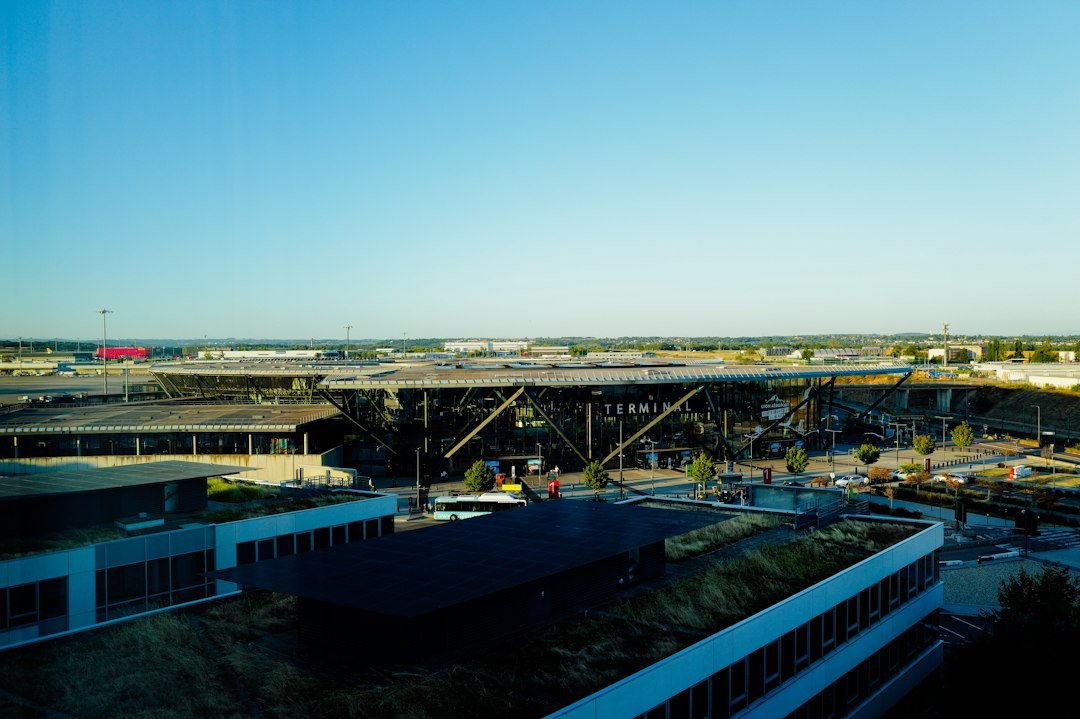
Photo: Adrien Olichon on Unsplash (illustrative).