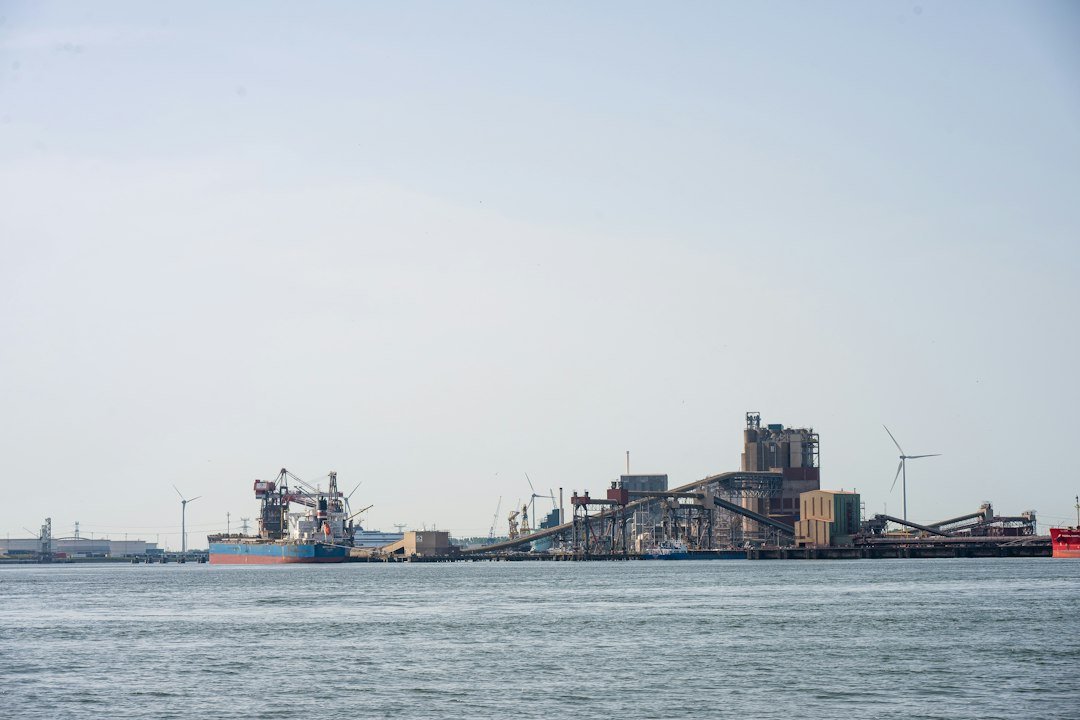
Abu Dhabi’s port operator has planted its flag in South America. In early October 2026, AD Ports Group confirmed it had completed the purchase of Corredor Logística e Infraestrutura (CLI), a Brazilian operator of export terminals for sugar, grain and other agricultural bulk cargo. The deal carries an enterprise value of about AED 3.1 billion (US$835 million), making it the largest acquisition the group has ever made.
On the surface, this is a port company buying more ports. Look a little closer and it is also a food-supply story for the UAE, which imports most of what it eats, and a sign of how Gulf state-backed companies are using overseas assets to tie distant producers directly into their own logistics hubs. Here is what was agreed, why Brazil matters, and what to watch next.
Key takeaways
- AD Ports Group has closed its US$835 million (AED 3.1 billion) acquisition of Brazilian agri-bulk terminal operator CLI, its biggest deal to date.
- The transaction was first announced on 2 June 2026 and closed after clearance from Brazil’s waterway regulator ANTAQ and competition authority CADE.
- CLI runs two export terminals: CLI Sul at the Port of Santos and CLI Norte at the Port of Itaqui, both under long-term concessions.
- The terminals handled around 17 million tonnes of agricultural cargo in 2025 and generated about US$178 million in revenue.
- AD Ports plans direct trade routes linking Brazil with Khalifa Port and the Abu Dhabi Food Hub, strengthening the UAE’s food-supply chain.
What happened
AD Ports Group, the Abu Dhabi-listed ports, logistics and maritime company, agreed in June to buy CLI from investment funds managed by Macquarie Asset Management and IG4 Capital. Completion depended on approvals in Brazil, where port concessions and competition in the logistics sector are closely regulated. Once ANTAQ, the national waterway transport agency, and CADE, the antitrust watchdog, signed off, the deal closed and the company announced completion in the first week of October. Trade press had expected the timing: the group’s second-quarter results in August pointed to closing around the end of the third quarter.
Control of CLI now sits with Noatum Ports, the AD Ports unit that runs the group’s terminals outside the UAE. Its chief executive, Mohammed Al Tamimi, said the new business would be folded into the group’s existing international network. The company describes the purchase as its first strategic entry into South America.
| Item | Detail |
| Buyer | AD Ports Group (via Noatum Ports) |
| Target | Corredor Logística e Infraestrutura (CLI), Brazil |
| Enterprise value | AED 3.1 billion (about US$835 million) |
| Sellers | Funds managed by Macquarie Asset Management and IG4 Capital |
| Announced / completed | 2 June 2026 / early October 2026 |
| 2025 cargo volume | About 17 million tonnes |
| 2025 revenue | AED 654 million (about US$178 million) |
Background: what CLI actually owns
CLI is not a container business. It specialises in agricultural bulk, the commodities that are poured into the holds of large ships rather than packed into boxes. Its southern arm, CLI Sul, operates the integrated T16 and T19 terminals at the Port of Santos in São Paulo state, the busiest port in Latin America. Santos is a key outlet for Brazilian sugar, and CLI Sul also handles corn and soybeans. CLI acquired its 80% interest in that business from rail and logistics group Rumo in late 2022, with Rumo keeping the remaining 20%.
The northern arm, CLI Norte, sits at the Port of Itaqui in Maranhão state. It forms part of the so-called Arc of the North, a network of roads, rail lines, rivers and ports that has grown up to move soybeans and corn from Brazil’s expanding inland farm belt to the Atlantic coast without routing everything south to Santos. Together, the two terminals moved about 17 million tonnes of cargo in 2025. The business is profitable too: reported gross operating profit was roughly AED 360 million (about US$98 million) last year.
How it fits the bigger picture
For AD Ports, the acquisition extends a strategy of buying and building overseas terminals to complement its home base at Khalifa Port. The group has spent recent years expanding through acquisitions and concessions across several regions, and it has been building an agrifoods arm that handles the storage and movement of food commodities. Brazil is a natural next step. The country is among the world’s largest exporters of soybeans, sugar and corn, and owning the terminal at the point of export gives the operator more say over how and where those cargoes move.
The company has been explicit about the UAE link. It plans to set up direct routes connecting Brazil with Khalifa Port and the Abu Dhabi Food Hub in the KEZAD economic zone, which is designed as a regional centre for food trading, storage and processing. AD Ports also sees CLI as a bridge for trade between South America and markets in the Indian Subcontinent, East Africa and Southeast Asia.
The deal also lines up with the UAE’s trade diplomacy. According to the UAE’s Minister of Foreign Trade, Thani Al Zeyoudi, non-oil trade between the UAE and the Mercosur bloc, of which Brazil is the largest economy, reached US$6.2 billion in 2025. The UAE has said it remains committed to concluding a Comprehensive Economic Partnership Agreement (CEPA) with Mercosur, which would cut tariffs and make flows of the kind AD Ports is targeting cheaper and simpler.
Why it matters
Gulf states depend heavily on imported food, and recent years have shown how quickly shipping disruptions, export bans or price spikes can ripple into supermarket shelves. Owning infrastructure at the source is one way to reduce that exposure. A terminal operator cannot guarantee supply, but it can prioritise vessel slots, coordinate storage and help create a dependable pipeline between a major producer and a Gulf distribution hub.
For investors, the deal is a test of whether a Gulf operator can run a large, mature business on another continent and grow it. CLI arrives with existing cash flow, long-term concessions and established customers, which reduces the risk compared with building a new terminal from scratch. For Brazil, the transaction brings in a new long-term owner with an interest in expanding export capacity, at a time when moving crops from farm to port remains one of the country’s main logistical challenges.
Challenges and what comes next
Integration is the immediate task. Noatum Ports will need to merge CLI’s systems and teams into its network while keeping Brazilian exporters, who have plenty of terminal choices at Santos, satisfied. Concession terms, environmental rules and labour arrangements in Brazilian ports are complex, and any expansion will need fresh regulatory approval.
The bigger question is how quickly the promised direct Brazil to Abu Dhabi routes materialise and at what scale. Most Brazilian grain and sugar is sold on global markets to the highest bidder, so turning terminal ownership into steady flows toward the Gulf will depend on commercial contracts, shipping economics and, potentially, the outcome of the UAE-Mercosur trade talks. Investors will be watching AD Ports’ coming quarterly results for the first numbers that include CLI.
Frequently asked questions
How much did AD Ports pay for CLI?
The transaction values CLI at an enterprise value of about AED 3.1 billion, or roughly US$835 million. It is the largest acquisition in AD Ports Group’s history.
Which Brazilian ports does CLI operate in?
CLI runs CLI Sul at the Port of Santos, focused on sugar along with corn and soybeans, and CLI Norte at the Port of Itaqui in northern Brazil, part of the Arc of the North export corridor. Both operate under long-term concessions.
What does the deal mean for the UAE?
AD Ports plans direct shipping links between Brazil, Khalifa Port and the Abu Dhabi Food Hub. If those routes develop, they would give the UAE a more direct channel to one of the world’s biggest food exporters and support its long-term food security goals.
The bottom line
AD Ports’ purchase of CLI is more than a geographic expansion. By buying established grain and sugar terminals in Brazil, the Abu Dhabi group is linking one of the world’s farm superpowers to its own port and food-logistics hub at home. The deal is done; the real measure of success will be whether it produces regular, efficient cargo flows between South America and the Gulf in the years ahead.
Photo: Julia Taubitz on Unsplash (illustrative).