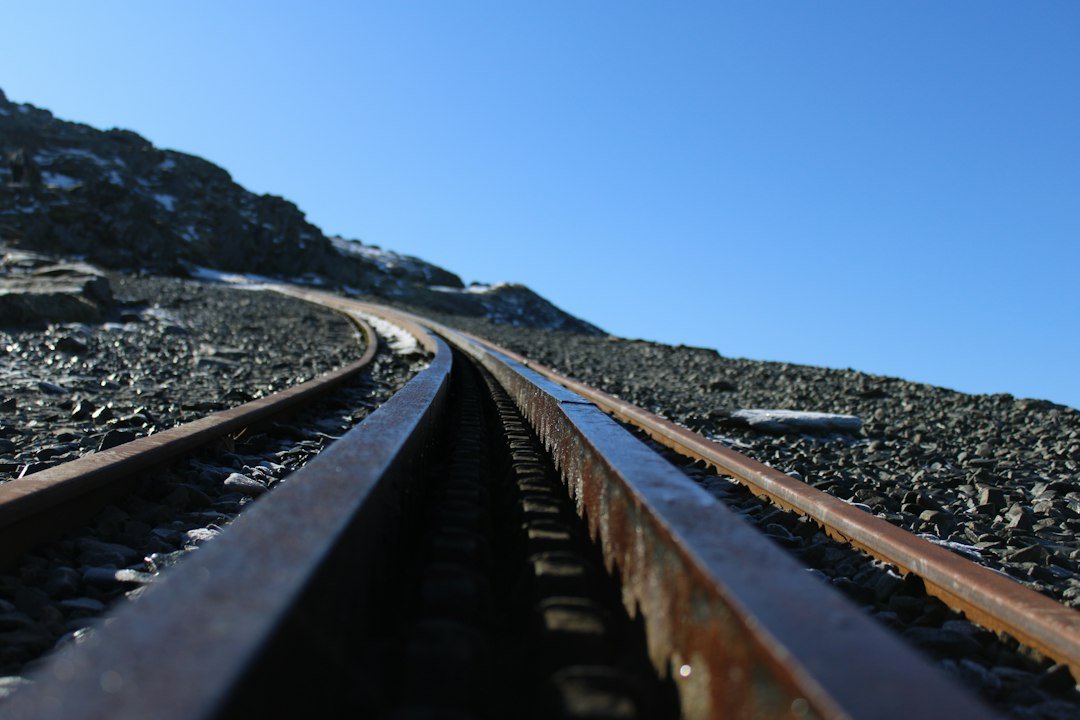
The railway that will connect Oman and the United Arab Emirates has reached a new stage. Track laying has started on Hafeet Rail, the cross-border line between the port of Sohar and the UAE’s national rail network, marking the project’s shift from earthworks and civil construction to building the railway itself.
Hafeet Rail is the first railway designed to link two Gulf states, and it is widely seen as the first real piece of the long-planned GCC rail network.
Key takeaways
- Hafeet Rail is a 238 km line connecting Sohar in Oman with the UAE rail network via Al Buraimi and Al Ain.
- The project is valued at around US$2.5 billion and is a joint venture between Etihad Rail, Oman Rail and Mubadala.
- Construction was about 40% complete in April 2026, and track installation has since begun.
- Oman has formally ratified its railway agreement with the UAE by royal decree.
The route
The line begins at Sohar, one of Oman’s main ports on its northern coast, climbs inland through Wadi Al Jizzi, crosses the border at Al Buraimi and Al Ain, and joins the UAE’s Etihad Rail network. The railway takes its name from Jebel Hafeet, the mountain near the border that holds historical and strategic significance for both countries.
Once complete, the line will connect five major ports along with a range of industrial and free zones in both nations, giving businesses a direct rail link between Oman’s coast and the UAE’s logistics hubs.
An engineering challenge
Unlike much of the flat UAE desert, the Hafeet corridor crosses the rugged Hajar mountain region. The design includes around 60 bridges, some as tall as 34 metres, and tunnels with a combined length of about 2.5 km. Engineers have also had to build flood protection, since sudden heavy rain can send water rushing through the wadis.
Progress figures released in April 2026 give a sense of the scale:
- More than 27 million cubic metres of earthworks completed
- Over 100,000 cubic metres of concrete poured
- Excavation under way on the project’s first two tunnels
- More than 10 million working hours logged without a serious injury
How the project got here
The railway moved firmly into implementation during Sultan Haitham bin Tarik’s state visit to the UAE in April 2024. Shareholder agreements were signed, major construction contracts were awarded and the joint company adopted the Hafeet Rail name. In 2026, Oman added a further formal step when the Sultan ratified the bilateral railway agreement through Royal Decree 75/2026.
Commercial interest is already building. In October 2025, Noatum Logistics, part of AD Ports Group, signed a preliminary agreement with Hafeet Rail to set up a freight service between Sohar and Abu Dhabi.
Why Hafeet Rail matters
- Faster freight: goods arriving at Sohar could reach UAE markets by train, cutting transit times and reducing reliance on trucks.
- Port competition: a rail link makes Sohar more attractive as a regional gateway, giving shippers more route options.
- Investment along the corridor: logistics parks, warehouses and factories tend to cluster near reliable rail links.
- Future passenger travel: the line is also intended to support passenger services, which could boost tourism and family travel between the two countries.
- National strategies: the project supports both Oman Vision 2040 and the UAE’s development goals by diversifying their economies.
Part of a bigger Gulf rail picture
Hafeet Rail doesn’t stand alone. The UAE’s Etihad Rail now runs passenger trains between Abu Dhabi, Dubai and Fujairah, Saudi Arabia is designing its section of the GCC Railway towards the UAE border, and the UAE and Saudi Arabia have recently agreed to study freight rail links. Together, these projects point towards a connected rail network across the Arabian Peninsula, with the GCC Railway targeting full operation by the end of 2030.
Frequently asked questions
How long is Hafeet Rail?
The line is planned to be 238 km long.
Who is building Hafeet Rail?
It is developed by Hafeet Rail, a joint venture of Etihad Rail, Oman Rail and Mubadala Investment Company.
Will passengers be able to use it?
Yes, the railway is designed to support passenger services in future as well as freight. No passenger start date has been announced.
Photo: Bradley Pritchard Jones on Unsplash (illustrative).