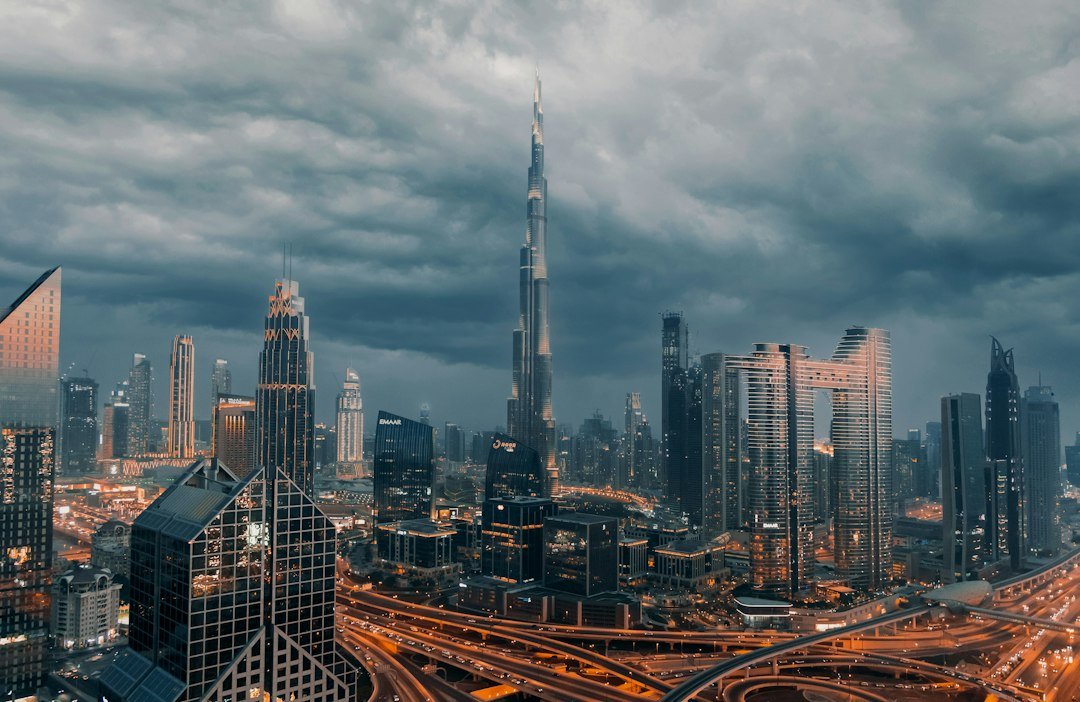
Dubai has taken another large step in rebuilding how the city copes with heavy rain. Dubai Municipality has awarded four contracts worth a combined Dh3 billion (about $817 million) for the third phase of Tasreef, the emirate’s Dh30 billion programme to overhaul its stormwater drainage network. The package covers roughly 100 kilometres of new and extended main drainage lines running through some of Dubai’s most established neighbourhoods.
The award, announced on October 25, 2026, comes two and a half years after the April 2024 storm that flooded roads, homes and the airport and exposed the limits of drainage systems built for a desert climate. This article explains what the new contracts include, where Tasreef has reached so far, and why a city that rarely sees rain is spending so heavily to prepare for it.
Key takeaways
- Dubai Municipality has awarded four Tasreef Phase 3 contracts worth Dh3 billion in total.
- The work adds around 100 km of main drainage lines, with pipes up to 3 metres in diameter, across nearly 100 sq km.
- Eleven areas benefit, including Jumeirah, Umm Suqeim, Al Safa, Al Quoz, Al Barsha, Al Wasl, Za’abeel, Satwa and Al Marmoom.
- The overall Dh30 billion Tasreef programme aims to raise Dubai’s drainage capacity sevenfold, to more than 20 million cubic metres a day, by 2033.
- Phase 2, awarded in February 2026, was worth Dh2.5 billion and included a tunnel of up to 4 metres in diameter.
What Dubai has awarded
The third phase is made up of four projects. Together they will build and extend about 100 km of trunk stormwater lines, some as wide as 3 metres, serving close to 100 square kilometres of residential, commercial, industrial and tourism districts. The listed areas are Jumeirah, Umm Suqeim, Al Safa, Al Manara, Al Quoz, Al Barsha, Al Wasl, Za’abeel, Al Bada’a, Al Satwa and Al Marmoom.
Many of these are older, densely built parts of the city that sit between the coast and Sheikh Zayed Road. Retrofitting large-diameter pipes beneath existing streets and villas is far harder than laying them in greenfield developments, which helps explain why these districts are being tackled as a dedicated package. The new lines will connect into the municipality’s main stormwater network, so the aim is not only to collect water locally but to move it quickly to outfalls and storage points.
Official announcements did not name the contractors or break down the value of each of the four contracts.
Background: why Tasreef exists
In mid-April 2024 the UAE recorded its heaviest rainfall since data collection began in 1949, according to the National Centre of Meteorology, with more than 250mm falling in parts of the country in under a day. That is more than double what many areas would normally receive in a full year. Dubai’s roads, underpasses and residential communities flooded, and operations at Dubai International Airport were badly disrupted for several days.
Two months later, in June 2024, Dubai’s ruler Sheikh Mohammed bin Rashid Al Maktoum approved Tasreef. Rather than carrying out piecemeal repairs, the city opted for a long-term rebuild designed, in the municipality’s words, to serve Dubai for the next 100 years. The programme targets a 700 per cent increase in rainwater drainage capacity, and on completion the system should be able to handle more than 20 million cubic metres of water per day.
How Phase 3 fits the bigger programme
Tasreef is being rolled out in stages. Phase 1 contracts were awarded in April 2025. Phase 2 followed on February 26, 2026: five projects worth Dh2.5 billion, comprising three construction contracts and two study and design contracts. Its centrepiece is a main tunnel of up to 4 metres in diameter, a network of more than 27 km between Sheikh Zayed Road and Al Jamayel Road, a pumping station and a stormwater collection lake near the Dubai–Al Ain Road. Contractors named for that phase included DeTech Contracting and China State Construction Engineering Corporation.
| Milestone | Date | Detail |
|---|---|---|
| Tasreef approved | June 2024 | Dh30bn programme, 700% capacity increase targeted |
| Phase 1 awarded | April 2025 | First construction packages |
| Nad Al Sheba network completed | June 2025 | Dh277m sewerage and drainage network |
| Phase 2 awarded | February 2026 | Five projects worth Dh2.5bn, including a tunnel up to 4m wide |
| Al Quoz Creative Zone network completed | April 2026 | First stage of a wider Al Quoz programme |
| Phase 3 awarded | October 2026 | Four contracts worth Dh3bn, about 100 km of main lines |
| Target completion | 2033 | Over 20 million m³ per day capacity |
Alongside the large phases, smaller standalone projects have continued, such as a Dh150 million stormwater tunnel for Dubai South. The municipality has also prepared 10 temporary water collection lakes to absorb runoff during heavy storms while the permanent network is built.
Why it matters
For residents, the benefit is straightforward: fewer flooded streets, fewer stranded cars and less damage to homes when a major storm arrives. For the economy, the stakes are larger. Dubai’s model depends on reliable connectivity, and the 2024 flooding showed how a single weather event can halt flights, close roads and interrupt supply chains. Insurers, investors and tourism operators all pay attention to how a city manages physical risk.
There is also a climate dimension. Scientists expect heavier, more intense rainfall events in parts of the Gulf as the climate warms, even if total annual rainfall stays low. Tasreef is explicitly linked to the Dubai 2040 Urban Master Plan and the UAE’s climate goals, and it reflects a broader shift across GCC cities from designing infrastructure for average conditions to designing it for extremes. For contractors and engineering firms, the programme represents one of the region’s largest and most sustained utilities pipelines.
Challenges and what comes next
The main difficulty with Phase 3 is location. Installing 3-metre pipes under busy, mature districts such as Jumeirah, Satwa and Al Barsha means managing traffic diversions, existing utility lines and high groundwater close to the coast. Contractors are likely to rely on trenchless methods such as microtunnelling in sensitive stretches, although project-level methods have not been published.
The next signals to watch are the naming of the Phase 3 contractors, the start of site works, and how the network performs during the coming winter rain seasons. With roughly seven years left before the 2033 target date, Dubai still has further phases to award before the full Dh30 billion is committed.
Frequently asked questions
What is the Tasreef project?
Tasreef is Dubai Municipality’s Dh30 billion programme, approved in June 2024, to expand the city’s stormwater drainage network and raise its capacity sevenfold by 2033.
Which areas are covered by Phase 3?
Jumeirah, Umm Suqeim, Al Safa, Al Manara, Al Quoz, Al Barsha, Al Wasl, Za’abeel, Al Bada’a, Al Satwa and Al Marmoom, covering nearly 100 square kilometres.
When will the full network be finished?
The programme is scheduled for completion in 2033, when the system should be able to handle more than 20 million cubic metres of water per day.
The bottom line
The Dh3 billion Phase 3 award moves Tasreef from planning into the heart of established Dubai. It is the clearest sign yet that the emirate treats the 2024 floods as a lasting lesson, and that resilience against rare but extreme weather is now a core part of its infrastructure spending.
Photo: Ahmed Aldaie on Unsplash (illustrative).