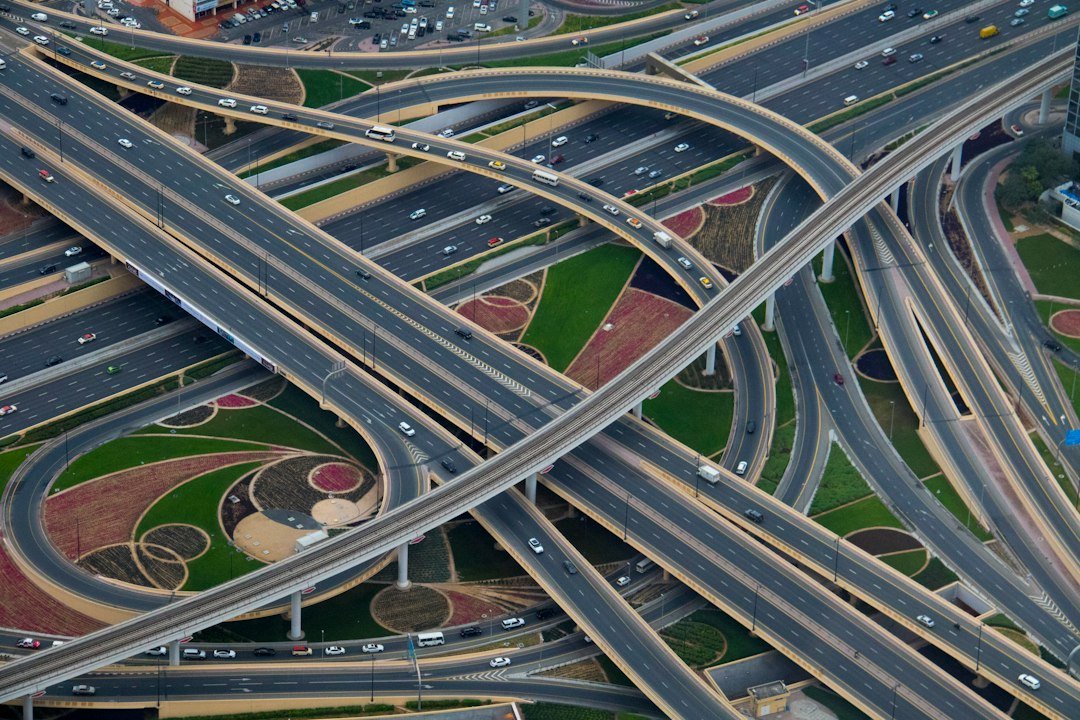
Abu Dhabi has unveiled the full scope of a AED872 million (about $237 million) road package that will plug two of its fastest-growing island communities, Ramhan Island and Jubail Island, directly into the Sheikh Khalifa bin Zayed Highway, the E12. The Department of Municipalities and Transport (DMT) says the scheme combines seven bridges, three tunnels and a large interchange, and that advanced works are already under way ahead of a planned opening in 2027.
On paper it is a fairly modest sum by Gulf standards. In practice, it solves a very specific problem: how to give thousands of future homes, a marina and hotels on two islands a reliable road connection without choking one of the capital’s busiest coastal corridors. Here is what is being built, why it matters, and what to watch as it heads towards completion.
Key takeaways
- Budget of AED872 million (roughly $237 million) for road links from Ramhan and Jubail islands to the E12.
- The package includes seven bridges, three tunnels, plus ramps, local roads and utility corridors.
- The main interchange covers more than 166,000 square metres.
- The DMT says advanced works are under way, with completion targeted for 2027.
- Around 90% of construction waste, more than 2,200 tonnes, is being recycled, and LED lighting is used throughout.
What has been announced
The DMT, the Abu Dhabi government body responsible for roads and urban planning, set out the project on 27 October 2026. Rather than a single bridge, it is a layered junction system: seven bridges and three tunnels arranged around an interchange spanning over 166,000 square metres, supported by a network of ramps, connecting roads and service corridors for utilities.
The stated aim is to improve access to the two islands while raising capacity and smoothing traffic on the E12, which links central Abu Dhabi with Saadiyat Island, Yas Island and beyond. Eng Eisa Mubarak Almazrouei, the DMT’s Director General of Infrastructure Development, framed the scheme as part of a wider push to build integrated communities that support economic growth and quality of life. The department has not yet published details such as lane counts or projected vehicles per hour, so those remain open questions.
| Item | Detail |
|---|---|
| Project owner | Department of Municipalities and Transport (DMT), Abu Dhabi |
| Budget | AED872 million (about $237 million) |
| Structures | 7 bridges, 3 tunnels, ramps, roads and utility corridors |
| Interchange area | More than 166,000 square metres |
| Status | Advanced works under way |
| Target completion | 2027 |
Background: two very different islands
Ramhan Island is a waterfront project by developer Eagle Hills, launched in March 2023 and located between Saadiyat and Yas islands. It covers roughly 400 hectares, with more than half of that developable, and is planned to hold about 1,800 standalone villas, 900 marina residences, a luxury hotel and a retail promenade. Until a permanent road link opens, the island has been reached mainly by a short boat trip from the mainland just off the E12, which is precisely the gap this project is designed to close.
Jubail Island, developed by LEAD Development on behalf of Jubail Island Investment Company, is much larger at about 4,000 hectares and is known for its protected mangroves, waterways and nature trails. It already has a main bridge: a 140-metre crossing to the E12 that was completed in 2022. The new package goes further, building a more complete interchange system so that traffic to and from both islands can join and leave the highway without disrupting through traffic.
How it fits Abu Dhabi’s bigger picture
Abu Dhabi’s growth has increasingly shifted towards its offshore islands. Saadiyat has become a cultural and residential district, Yas is a leisure and entertainment hub, and a string of newer master-planned islands is filling the space between and around them. Almost all of that growth leans on the E12, so every new community adds pressure to the same spine road.
The emirate has been responding with a series of targeted road upgrades rather than one mega-project. Earlier in October, for example, plans were announced for road improvements in the Mussafah industrial area aimed at easing congestion. The Ramhan and Jubail scheme follows the same logic: build the junctions and feeder roads before the new homes fill up, so that the highway keeps flowing as population rises.
There is also an economic angle. Gulf property developers sell off-plan homes on the promise of future access and amenities. Delivering the public road link on a published timetable helps underpin buyer confidence in island projects, and gives developers a clearer date to plan handovers, hotel openings and retail leasing around.
Why it matters
For residents, the most obvious benefit is reliable, direct access by car to the city and the leisure districts on Saadiyat and Yas. For the wider road network, separating island traffic through dedicated bridges and tunnels should reduce the weaving and merging that typically causes bottlenecks at busy highway exits.
The project’s environmental measures are worth noting too. The DMT says around 90% of construction waste, more than 2,200 tonnes, is being recycled, and energy-efficient LED lighting is being used to cut electricity consumption and light pollution. Lower light spill is particularly relevant on Jubail Island, where the mangrove setting is central to the development’s identity.
Challenges and what comes next
Building bridges and tunnels next to a live highway and sensitive coastal habitat is technically demanding. Traffic diversions on the E12 during construction, marine works around the islands and the need to protect mangroves all add complexity. Keeping to the 2027 date will depend on how smoothly the remaining structural and tie-in works proceed.
Key things to watch include the publication of capacity figures, the phasing of openings (whether some bridges or ramps open earlier than others), and how the timing lines up with the first major handovers on Ramhan Island. Public transport links, such as bus routes serving the islands, would also help determine how much new car traffic the communities eventually generate.
Frequently asked questions
How much does the Ramhan and Jubail road project cost?
The DMT has put the budget at AED872 million, which is roughly $237 million.
When will the new bridges open?
Completion is expected in 2027. The DMT says advanced works are already under way, though it has not given an exact opening month.
What exactly is being built?
Seven bridges, three tunnels and an interchange covering more than 166,000 square metres, along with ramps, local roads and utility corridors connecting both islands to the Sheikh Khalifa bin Zayed Highway (E12).
The bottom line
The AED872 million Ramhan and Jubail interchange is not Abu Dhabi’s biggest infrastructure project, but it is a telling one. It shows the emirate building access infrastructure in step with its island developments, aiming to keep the E12 moving as new residents and visitors arrive on its islands. If it opens on schedule in 2027, it will turn Ramhan from a boat-access island into a fully connected suburb and give Jubail a far more robust link to the city.
Photo: Nick Fewings on Unsplash (illustrative road network in the UAE).